
In This Article
The Life of a Donated Item
It Starts in a Cupboard
Somewhere in a flat in Gurugram, a woman pulls a blanket from the back of her cupboard. It is thick, barely used, bought two winters ago and replaced by a warmer one this year. She has been meaning to do something with it. A collection drive notice from a local NGO gives her the nudge. She folds it, puts it in a bag, and leaves it at the drop-off point at her apartment gate.
That is where most people's idea of donation ends. The bag leaves. The blanket disappears into a vague sense of having done something good. But the blanket's journey is just beginning.
The Sorting Room
The bag arrives at a collection point and then at a sorting facility. Here, volunteers go through every item. The blanket is checked: is it clean, intact, genuinely usable? Not everything that gets donated is. A meaningful portion of what arrives at NGO sorting rooms cannot be passed on because it is damaged, unhygienic, or simply not what communities need. This one passes.
It is tagged, logged, and added to an inventory. On a spreadsheet somewhere, it becomes one unit in a column. But it is still a blanket, and it is still moving.
The Matching
Before anything reaches a community, there is planning. Field workers have already mapped which families are most in need, cross-referencing previous distributions, seasonal vulnerability, and household size. A family in a resettlement colony in Faridabad has been flagged: five members, no adequate winter bedding, two children under six.
The blanket gets assigned. It joins a consignment that will go out with a distribution team on Saturday morning. The woman in Gurugram does not know this. She is already thinking about something else.
The Morning of the Distribution
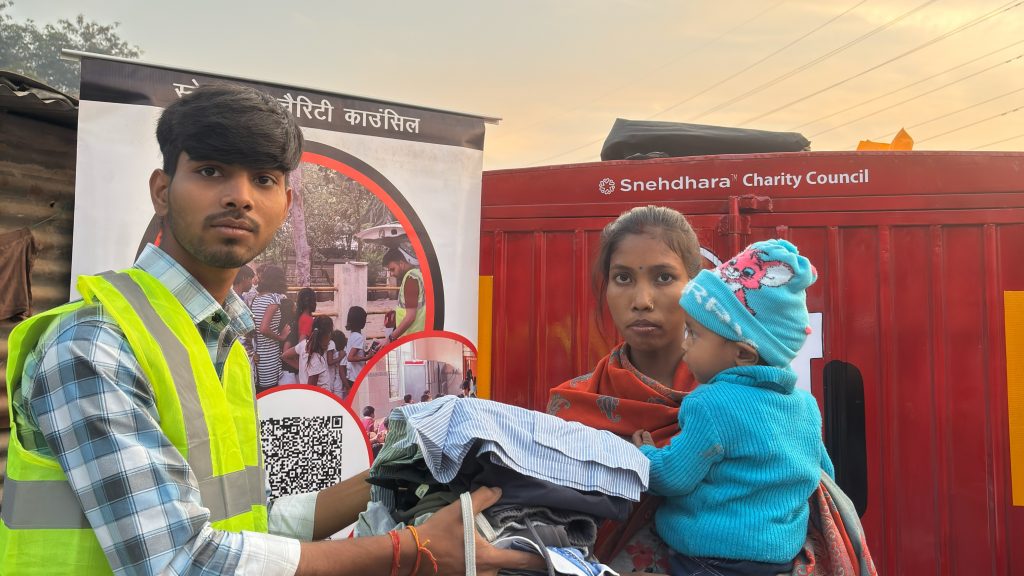
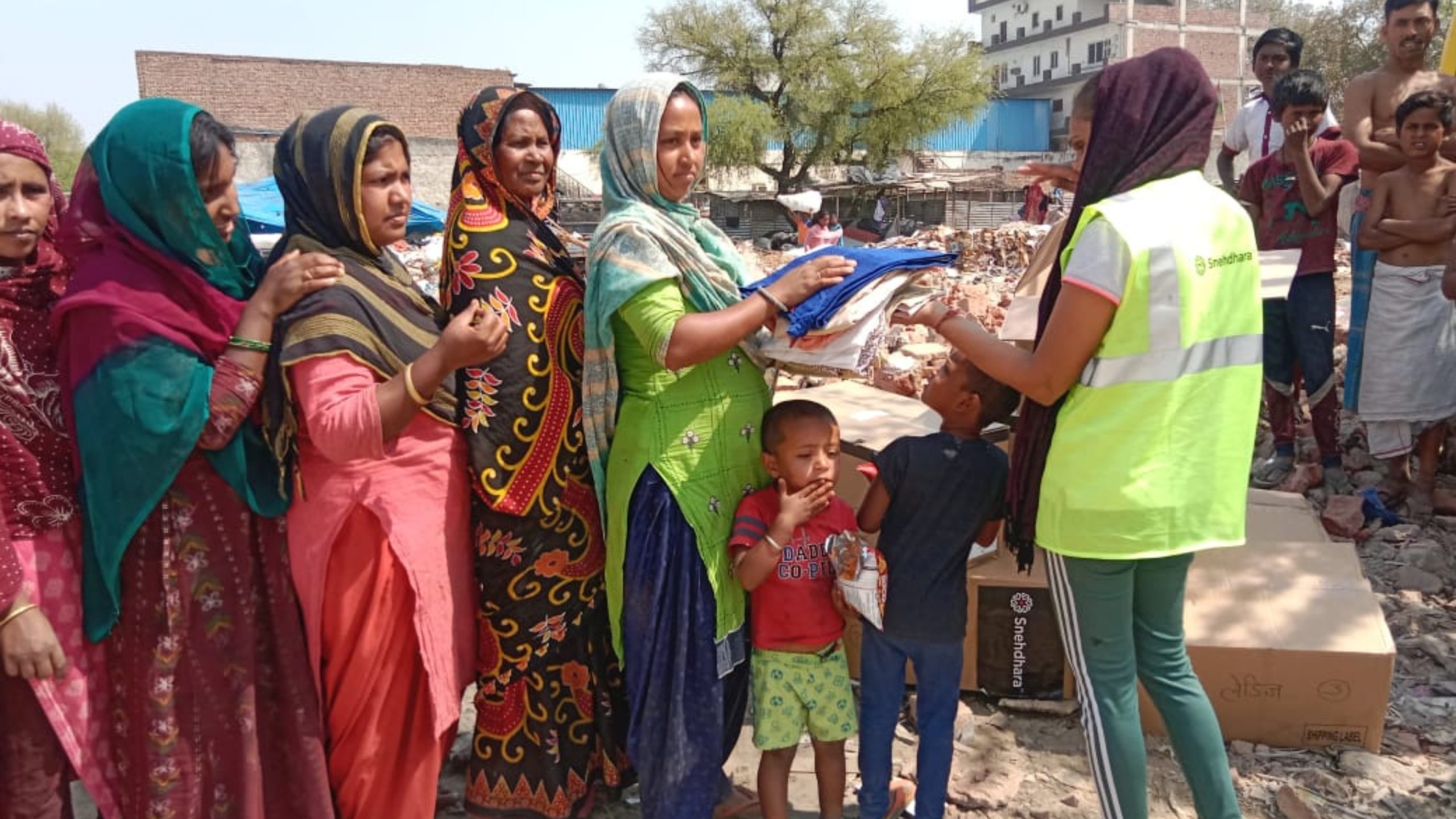
The team arrives early, before the day gets busy and before people leave for work. Distributions in dense communities require coordination: the right people need to be home, queues need to be managed with dignity, records need to be kept so that nothing goes to the same household twice while another goes without.
A volunteer carries the blanket to a woman who is waiting near the front. She has two children with her. She takes the blanket, looks at it, runs her hand across the surface. She says something the volunteer will remember later but struggle to translate accurately. It is not quite thank you. It is closer to relief.
What the Blanket Does Next
That night, it covers two children in a room with no heating and a door that does not close properly against the wind. It will do this for several winters. It will be washed and aired and folded and used until it cannot be used anymore.
The woman in Gurugram will never know any of this. But this is what happened to the thing she left at her gate. It did not disappear. It travelled, was handled with care, was matched to a real need, and became part of someone's actual life.
Why the Journey Matters
Donation drives work when the chain between donor and recipient is handled with seriousness at every link. The sorting, the logistics, the field mapping, the distribution protocols: none of it is glamorous, all of it is necessary. What you give does not arrive by magic. It arrives because people at every stage of that chain show up and do their part.
The next time you clear out a cupboard, know that what you leave at the drop-off point has somewhere real to go.