
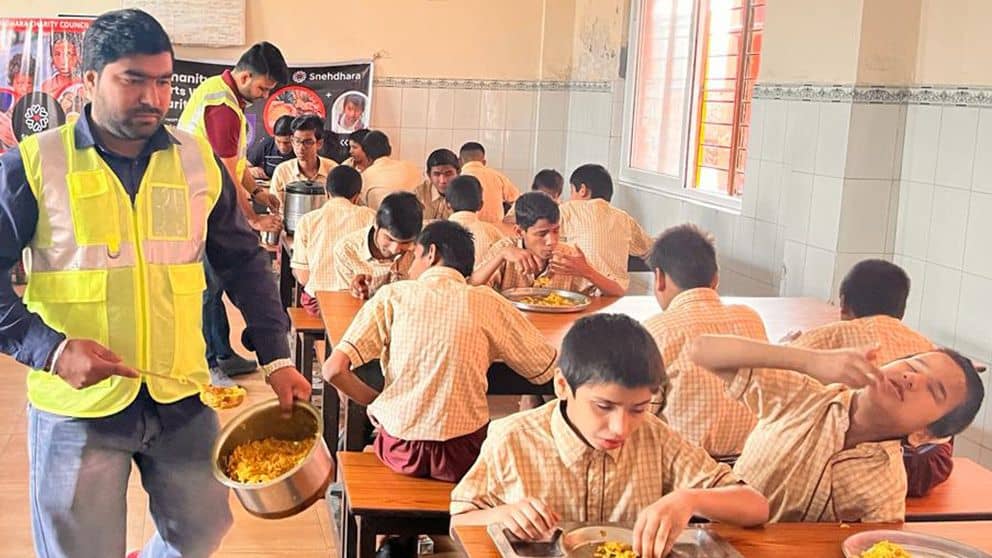
In many acts of charity, there’s often an unconscious assumption that the helper is somehow “above” the one being helped.
In many acts of charity, there’s often an unconscious assumption that the helper is somehow “above” the one being helped. This saviour mindset may be wrapped in good intentions, but it quietly reinforces power imbalances. It tells underprivileged communities, often unknowingly, that they need rescuing rather than empowerment. True change, however, comes not from acts of rescue, but from standing shoulder to shoulder—with humility and mutual respect.
At Snehdhara, we don’t believe in ‘saving’ people. We believe in enabling them. Whether it's distributing hygiene kits, hosting self-defence workshops, or setting up learning spaces, our work is rooted in partnership—not pity. We listen, we observe, and we adapt. Because people don’t need a hero—they need someone to trust their potential. When a child in a slum paints their future in bright colours, or a girl learns to defend herself, it’s not our story—it’s theirs.
Charity must evolve. It must be less about giving and more about sharing. Less about fixing and more about understanding. It’s time we moved away from the “saviour” narrative and embraced service rooted in equality. Let’s not ask, “How can we save them?” Let’s ask, “How can we walk with them?”
A Bundle of Hope

The Myths of NGO Work: What People Get Wrong About Ground-Level Change
This New Year Make Resolutions That Matter
When Summer Hits Harder: The Heat You Don’t See

Loneliness Is a Health Crisis
A Bundle of Hope
The Myths of NGO Work: What People Get Wrong About Ground-Level Change
This New Year Make Resolutions That Matter
When Summer Hits Harder: The Heat You Don’t See
Loneliness Is a Health Crisis